Tsedekyi: From life of misery to twilight years of comfort
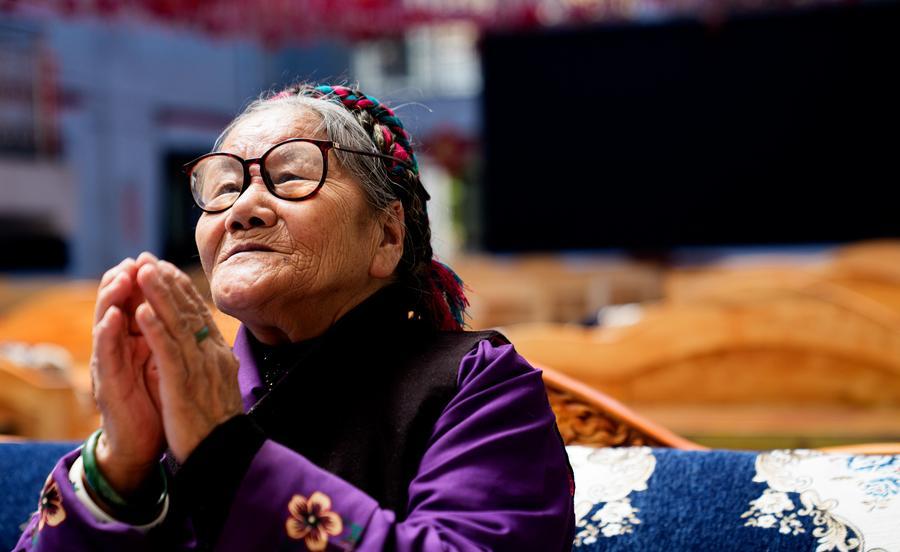
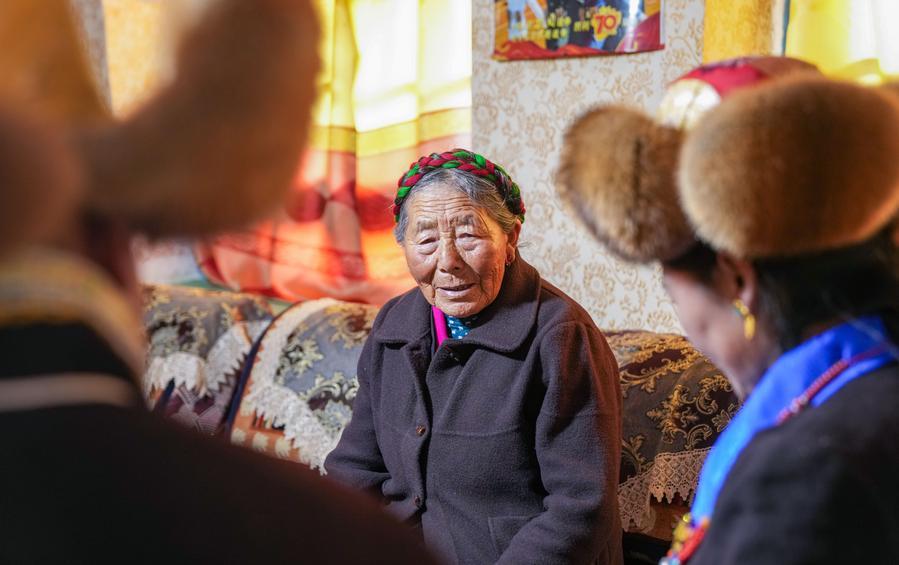
Tsedekyi, an 82-year-old former serf, now enjoys her twilight years in a care center in Sangri County of Shannan City. In contrast, her life in old Xizang was filled with suffering. Tsedekyi lost both her parents and was forced to beg for a living from a very young age. During those years, she often endured hunger and cold, filling her stomach by picking up roasted barley from the ground. She had no residence to live in and no clothing to protect her from the cold. After the democratic reform in Xizang in 1959, Tsedekyi's life changed completely as various national policies aimed at improving people's well-being were put into effect. Living together with 80 other senior citizens, Tsedekyi enjoys medical insurance, diverse daily meals, and a comfortable living environment, spending her remaining years in warmth and happiness.
Former Serf Tsering Sangmo witnesses changes of life in Xizang
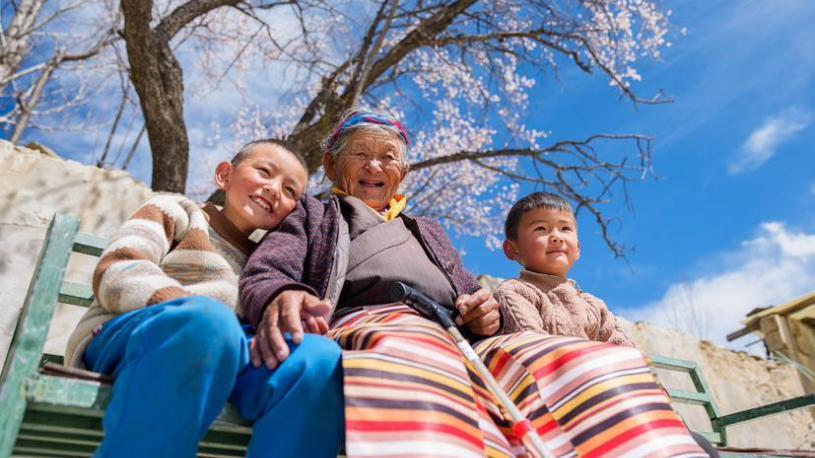
Tsering Sangmo, 88, lives in Zongkhar Village of Shannan City in Xizang. Blessed with a flourishing family, she often wears a smile on her face. Yet before the democratic reform in Xizang in 1959, her life was filled with hardship and struggle. Tsering Sangmo had been serving the serf-owners since she was eight years old. Hunger was Tsering Sangmo's most vivid childhood memory. It was not until the democratic reform in Xizang in 1959, when millions of serfs were emancipated, that her life truly began to change for the better. Today, Tsering Sangmo receives a state allowance, having bid a final farewell to those harsh old days. Every Tibetan New Year, a houseful of her descendants gather around, presenting her with hadas and offering heartfelt blessings. The elderly lady's smile, etched with deep wrinkles, speaks volumes of peace and joy of a life freed from hardship.
Konjo Chodron: Nearly century-long life of a former serf bears witness to better life
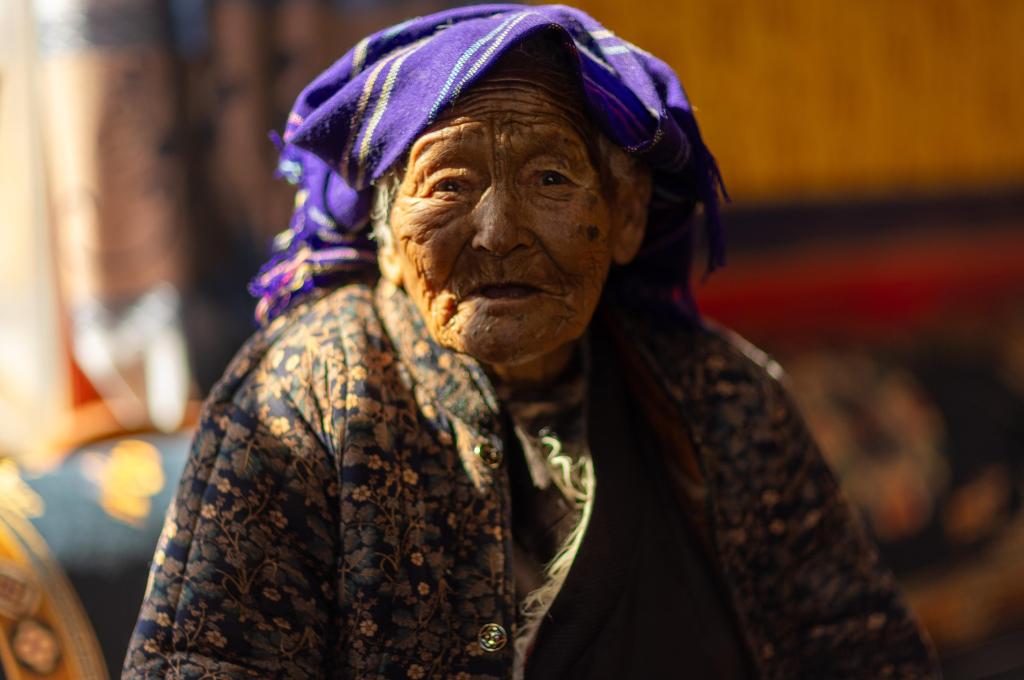
95-year-old former serf Konjo Chodron lives in Nyemo County, Lhasa City, southwest China's Xizang Autonomous Region. For as long as Konjo Chodron can remember, her life was defined by hardship. As a child, she didn't even have a proper place to live. Her entire family was crammed in a simple nomadic tent. Even meat and butter tea were luxuries she could only dream of. It was not until the democratic reform in Xizang in 1959, when millions of serfs were emancipated, that her life truly began to change for the better. "Speaking of the happy life I have today, I must thank our government!" the elderly woman said. Today, with income from livestock products, along with various subsidies for farmers and herders in Xizang, she no longer endures hunger or cold, living a life of ease and contentment. Konjo Chodron's nearly century-long life bears witness to the great journey of millions of liberated serfs in Xizang--rising to their feet and striding toward a better life.
Former serf embraces a better life in Xizang after a childhood of hardship
Ngawang Drolma, 82, lives in Kyerpa Village of Shannan City in southwest China's Xizang Autonomous Region. Her childhood was defined by hardship as she had been serving the serf-owners along with her parents since she was seven years old. As a serf, her main daily work was cattle-herding. She ran barefoot all year round, enduring scorching heat and bitter cold. Even when her feet were cracked, she never dared to rest for a moment. Working hard for a whole day, her family could only get a small measure of highland barley. The whole family suffered from hunger throughout the year, and their clothes were covered in patches. Wearing new clothes was an unattainable dream for them. It was not until the democratic reform in Xizang in 1959, when millions of serfs were emancipated, that her life truly began to change for the better. Nowadays, Ngawang Drolma lives a stable and comfortable life, with no worries about food or clothes, and no one bullies her family anymore. "I am filled with gratitude for having the life I have now," said Ngawang Drolma. "Having tasted all the bitterness in old Xizang, I know how precious today's life is."
Xizang's democratic reform brings new life to former serf Pudron
Pudron, 86, lives in Lumpa village of Xigaze City. She can never forget the old days when life was full of hardship but dignity. Since childhood, Pudron was under the strict control of serf owners. Living in a low adobe house with only a small window hole, her whole family slept on the floor with only a shabby sheepskin as a quilt. Pudron had to get up before dawn to serve various duties, like driving donkeys to carry goods and fertilizing the farmland. Besides, she had to twist wool and do weaving. Thick calluses formed on her hands... Throughout the year, she had no rest day, even though she was hurt. Life was unendurable for her and her family, but they had no choice but to live for tiny little earnings. It was not until the democratic reform in Xizang in 1959, when millions of serfs were emancipated, that her life truly began to change for the better. Nowadays, Pudron lives with her son and daughter-in-law in a spacious and warm two-story Tibetan-style house. She is not even used to having so much butter in daily life. "This is a 'sweet trouble' that I never dreamed of before," she said.
Life of former serf Padma Tashi ushers in brightness after democratic reform in 1959
Padma Tashi, an 84-year-old resident in Zhanang County of Xizang, has a miserable childhood during old Xizang that he can't bear to recall. Looking back on those days, the old man said he worked day and night, but remained hungry. At harvest season, he was required to hand over most of his newly-harvested grain to serf owners whose highland barley stockpiled in granaries was wormed. He lived without enough to eat, a life even worse than the serf owners' dogs that could enjoy fresh beef and tsampa mixed with yak butter. "I was whipped by serf owners just because there were few weeds mixed in the highland barley I delivered to them," recalled the 84-year-old. He said he also saw many serfs tortured at private prisons run by serf owners. It was not until the democratic reform in Xizang in 1959, when millions of serfs were emancipated, that Padma Tashi's life had ushered in brightness and hope. The serfs rose up and became their own masters, and so did Padma Tashi. He actively devoted himself to the construction of his hometown, witnessing its development and changes. Today, tremendous changes have taken place in Xizang, and the elderly's life has also been completely transformed. Padma Tashi sighed sincerely that happiness does not come easily.
Former Serf Dolma Ngodrup embraces a better life in Xizang
Dolma Ngodrup, 81, lives in Kyerpa Village of Shannan City in southwest China's Xizang Autonomous Region. Her childhood was defined by suffering, as she had served serf owners since she was seven years old. As a child, Dolma Ngodrup had to gather cow dung for fuel in the dead of winter, and once was attacked by wild dogs, leaving scars on her feet. Her arm was permanently injured by beatings from the serf-owner's sticks and remains unable to fully straighten. Even now, whenever she speaks of those dark days, her eyes are still filled with pain. It was not until the democratic reform in Xizang in 1959, when millions of serfs were emancipated, that her life truly began to change for the better. The once barren fields in Kyerpa Village have been turned into high-standard farmland, with the entire process from planting to harvest now fully mechanized. Former serfs no longer have to spend their days bending over in the fields. They have straightened their backs and truly become masters of their own land. With the support of a range of policies aimed at developing border areas, improving livelihoods and revitalizing rural communities, life for Dolma Ngodrup and her fellow villagers has steadily improved.
Former serf Tsering Samdrup reflects on a transformed life after democratic reform
Tsering Samdrup, an 83-year-old former serf, is now enjoying a happy life. He lives in a spacious and bright two-story Tibetan-style house. His granddaughter has built a hotel on their own land, adjacent to a commercial street in Samyai Town, with an annual income exceeding 100,000 yuan. When speaking of his life today, Tsering is filled with gratitude. "Such a good life was something we didn't even dare to imagine in old Xizang," Tsering said. Recalling the hardships of the old days, Tsering's words are filled with bitterness. Tsering's father was a tailor who made clothes and shoes for serf owners and wealthy families, yet he himself could only wear patched clothes and relied on meager earnings to support his family. His mother was also a serf who spent her entire life in servitude, with only three or four days of rest during the New Year. "In old Xizang, we had no freedom at all. We didn't even have the right to live to old age," Tsering lamented. Worse still, the older generation was unable to teach their children to read, leaving offspring engulfed in illiteracy and suffering in old days.