

As art therapy officially joins China's undergraduate major catalogue in 2026, universities across the country are exploring how to turn this new discipline into practical programs. Jingdezhen Vocational University of Art, a leading institution in the field, has completed a systematic faculty training program and developed a suite of courses designed to put art healing into practice.
Recently, more than 30 teachers from the university completed a 36-day training program organized in partnership with the China Education Association for International Exchange and the China International Education Institute. The training combined online theoretical study, offline workshops, and follow-up exercises that teachers conducted after returning to campus.
The program is based on a "Five-in-One" model developed by a research team led by Lin Yi, a professor at Peking University. The model clarifies the boundary between clinical psychotherapy and mental health promotion for the general public, giving university educators a practical definition of how art healing fits within education rather than medical treatment.
Teachers who completed the program said they now approach art classes differently. Instead of focusing on artistic skill and technical accuracy, they prioritize students' emotional engagement and personal growth through the creative process.
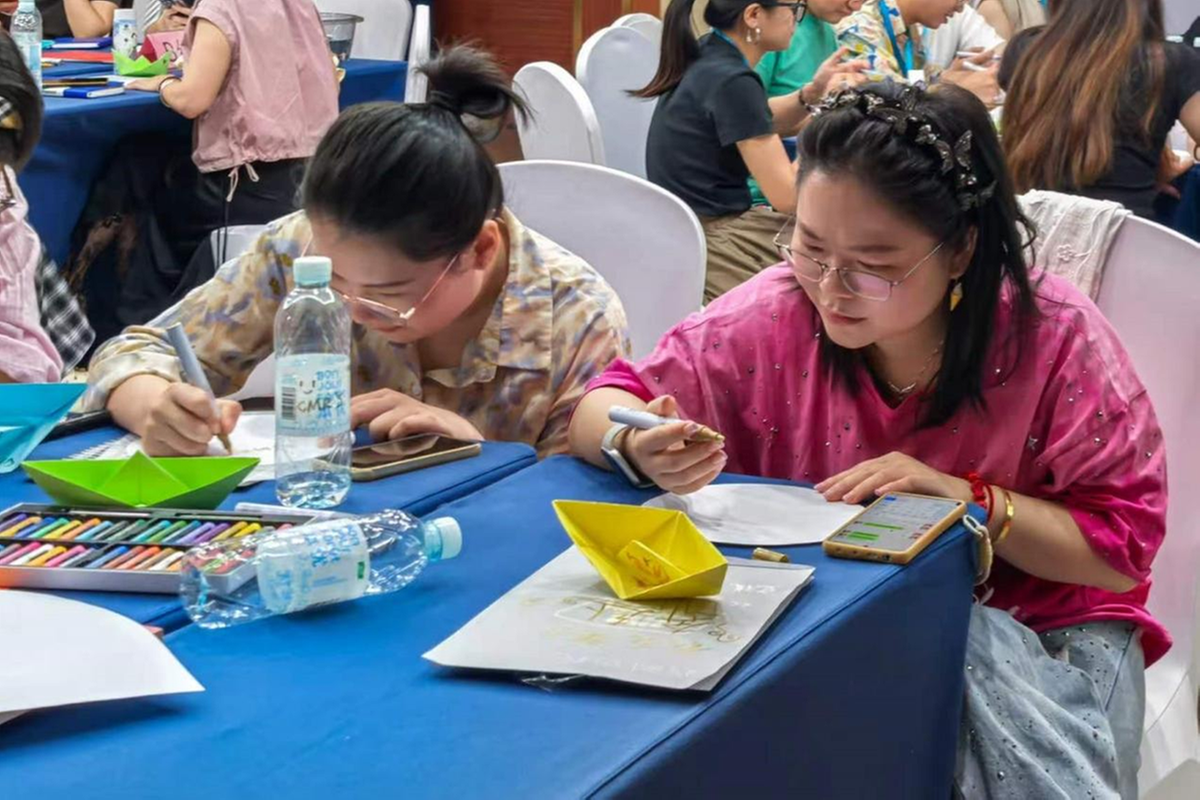
Teachers at a 36-day training program organized in partnership with the China Education Association for International Exchange and the China International Education Institute. More than 30 teachers attended the program. [Photo provided to chinadaily.com.cn]
The university is now building a minor program in art healing and plans to use the Fenghuang Mountain Art Healing Theme Park as an off-campus training base. By drawing on local Jingdezhen porcelain craftsmanship, the program aims to create hands-on opportunities for students to combine traditional art forms with modern mental health practices.
Looking ahead, the university plans to develop its curriculum, faculty capacity and teaching standards in parallel. Courses will combine theory workshops with supervised practice, and the program will seek alignment with professional certifications in the fields of psychological counseling and arts therapy.
For universities still in the early stage of developing art healing programs, Jingdezhen's model offers a concrete reference point in terms of faculty training, curriculum design and interdisciplinary cooperation. Its experience may help art healing grow from a new entry on the national catalog into a sustainable pillar of aesthetic and mental health education in Chinese universities.
Li Yiqian contributed to this story.
