

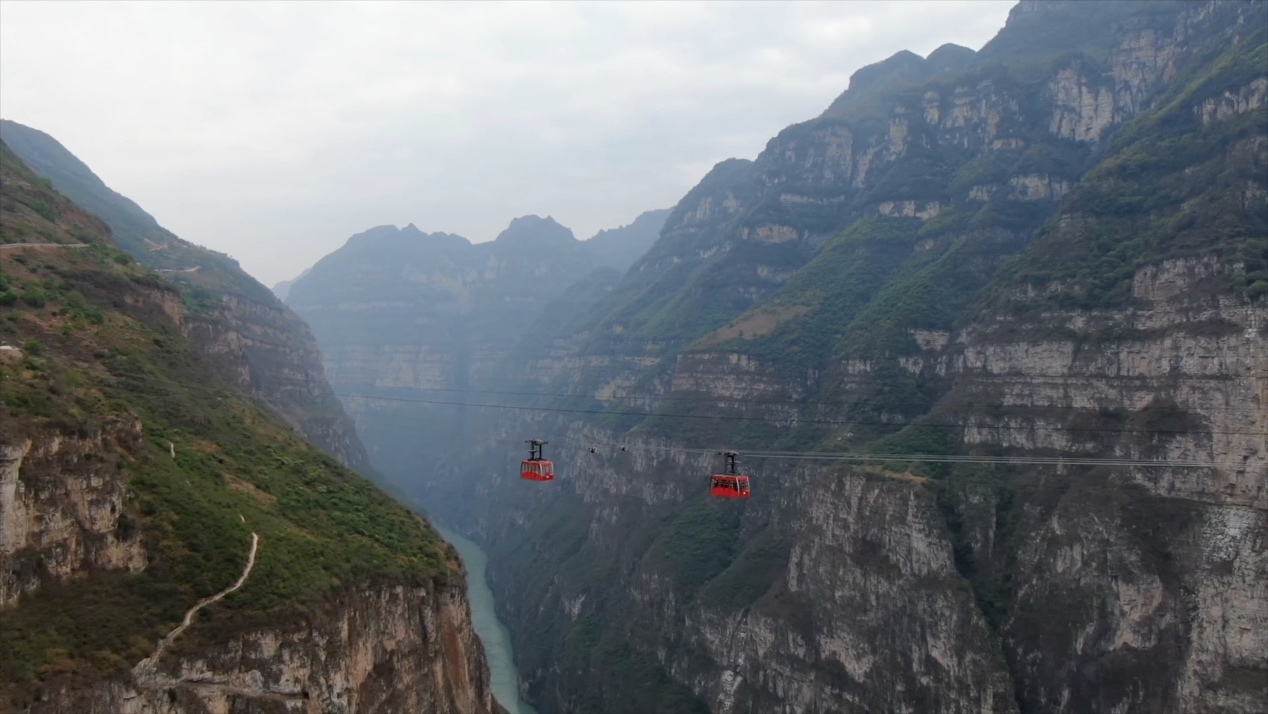
Cable cars in motion in Gulu Village, Sichuan Province, southwest China.
When many of us speak about China's transformation, we instinctively picture the skylines of Beijing or Shanghai, glass towers, sprawling highways, bullet trains slicing through megacities. As an African correspondent for China Global Television Network (CGTN), I have reported on that side of China many times.
But on a recent assignment, I set out to experience a different chapter of that transformation – one that unfolds far from the financial districts. This is the story of Gulu Village of Hanyuan County, tucked deep in the mountains of southwest China's Sichuan Province, and of how a simple cable car became a symbol of rural revival.
Leaving Beijing: A journey into the mountains
My journey began at Beijing Capital International Airport. Departure boards flickered with international destinations. Announcements echoed through the terminal. It felt like the familiar rhythm of global connectivity – the China the world knows.
But my destination lay thousands of kilometers away.
I flew three hours to Chengdu, capital of Sichuan Province. From there, it was another four-hour drive toward the Gulu hills. The city lights gradually faded into winding mountain roads. By the time we reached the foothills, night had already swallowed the cliffs. I checked into a small hotel to rest before the real climb began.
The next morning, February 25, 2026, the journey resumed. I was joined by CGTN's Tao Yuan, who spent years documenting rural transformation across China. Tao was my guide into a terrain she jokingly admitted she wasn't fully prepared to conquer.
"I am not a good climber myself," Tao laughed as we began the ascent.
"But the views are amazing," I replied, already out of breath.

CGTN reporter Tao Yuan and CGTN Africa's Enock Sikolia.
The climb that defined a community
Gulu Village is perched dramatically along near-vertical cliffs. Before modern infrastructure reached this region, residents navigated their environment using wooden ladders and vines fixed to rock faces. To understand the significance of what has changed, Tao insisted I try the old approach, a narrow concrete-and-stone stairway built in 2003.
The staircase is barely a meter wide. It hugs the cliff as though glued to it. In some sections, it feels almost vertical.
"It's like you are facing an entire wall," Tao observed.
She wasn't exaggerating. At moments, I found myself pressing my palm against raw rock, steadying each careful step.
"This one is a wall," I told her. "And I am told, during the war, people would climb such cliffs."
"Even now, they do," Tao replied. "The lady who sold us bamboo earlier, she lives in the lower village."
There are two villages perched along these cliffs, she explained, one slightly lower, the other higher up.
To climb this path once is exhausting. To do it daily, carrying produce, raising children, or seeking medical help, is something else entirely.

Climbing up the stairway built in 2003.
The man who never left — until he did
To truly understand Gulu's story, we met Zheng Wangchun, the village head. Born on the higher cliffs, Zheng did not leave the mountains until he was 12 years old.
He described a childhood shaped by isolation and risk.
"Life was very difficult for us," he recalled. "We descended using ladders or vines. Parents tied ropes around children to keep them safe. I did not leave the cliffs until I was 12. When I saw an electric bulb for the first time, I was very curious. We didn't have electricity back then."
His words reframed the staircase I had struggled to climb. For him and generations before him, that dangerous path was normal life.
In 2003, villagers constructed the narrow concrete stairway to replace the makeshift ladders. It improved safety, but the climb still took more than three hours.
Three hours to reach the world below.
Three hours to access markets, hospitals, schools.
Three hours to connect.
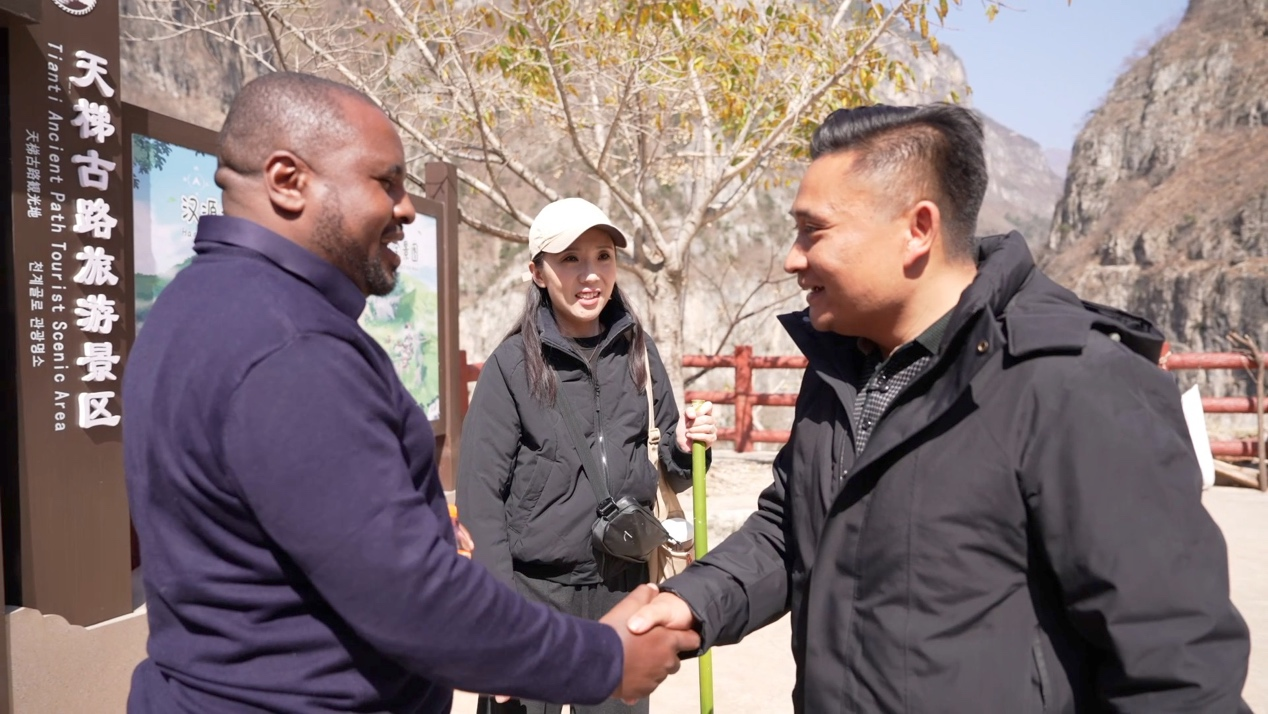
Zheng Wangchun (R), head of Gulu Village and a deputy to the 14th National People's Congress.
The cable car that changed everything
In 2018, everything shifted.
As part of China's nationwide poverty alleviation and rural revitalization campaign, a 750-meter cableway was installed in Gulu Village. It officially began operating on the National Day that year.
"Travel time dropped from three or four hours to three to five minutes," Zheng told us. "It opened a new era of connectivity."
Three to five minutes.
Standing inside the cable car as it glided over the valley, I felt the emotional weight of that statistic. Beneath us lay the steep cliffs that once dictated the rhythm of life. Above us stretched open sky. The valley unfolded like a painting.
The cableway is modest, no luxury cabins or flashy design. But its significance cannot be overstated. It shortened distances not just physically, but economically and psychologically.
And it did not come alone.
With the cableway came tap water for every household, stable electricity, and network access. Roads were carved through mountains. Tunnels stitched once-isolated peaks together. Bridges replaced dangerous crossings.
Infrastructure became the bridge between isolation and opportunity.

A cable car that began operation in 2018 has changed the lives of locals.
Agriculture, tourism, and new possibilities
We met Lan Xuan, a villager who now grows horticultural crops and fruits as part of Gulu's economic transition. She guided us through her orchard, demonstrating traditional weeding techniques with practiced ease.
"Isn't it amazing?" she said with a smile. "It's now easy to move between villages and beyond. It has really changed our lives."
Her orchard represents more than farming. It reflects a broader shift toward agri-tourism and diversified income. With improved access, visitors can now reach Gulu. Produce can reach markets faster. Supplies come in without the backbreaking climb.
Where once the cliffs were barriers, they are now attractions, dramatic landscapes drawing curious travelers.
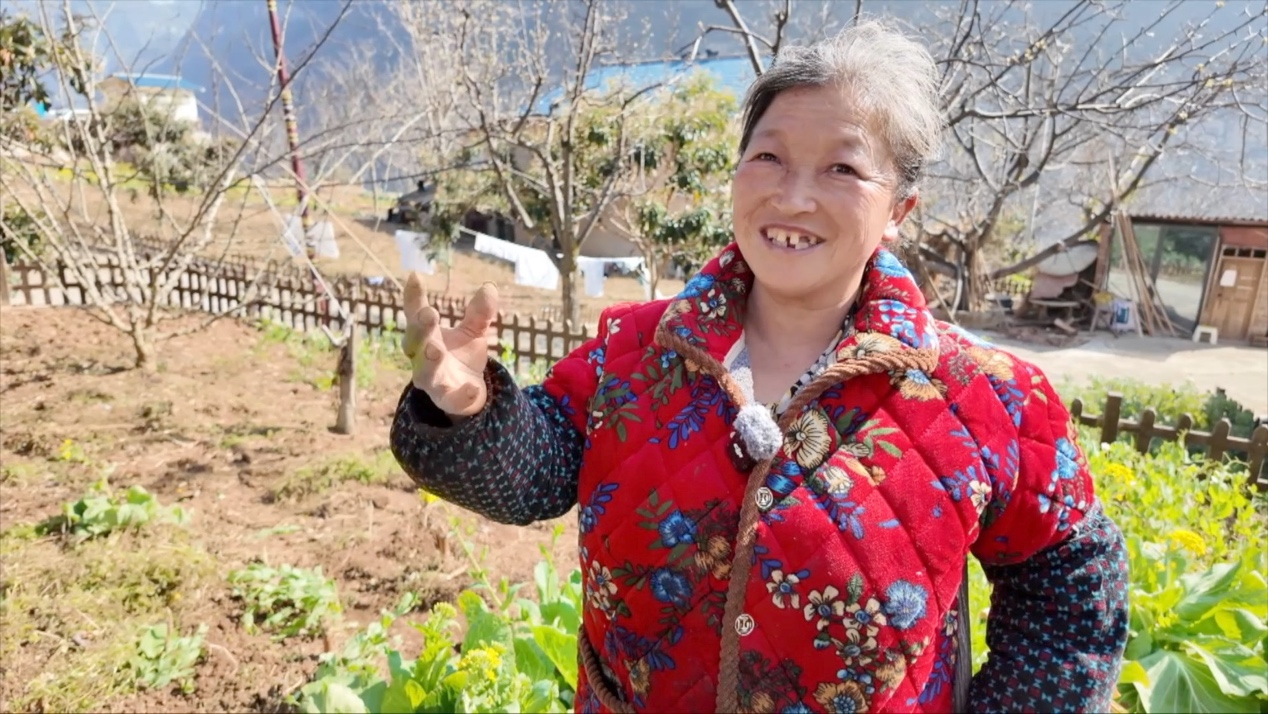
Lan Xuan, a local villager.
Voices from the village
Zheng Wangchun has served as Party branch secretary for six years and was elected as a deputy to China's National People's Congress three years ago. Ahead of the annual Two Sessions in Beijing, he convened villagers to listen to their concerns and explain government policies.
In a modest community gathering, elderly residents spoke candidly about daily life.
"There are few young people left because it's remote," one villager, Xiang Yucai, told us. "Most here are elderly. But the party secretary is working to improve our lives, running water arrived last year."
These meetings form a two-way channel: national policy explained locally, local realities conveyed nationally.
It was striking to witness this exchange in a village that, not long ago, had neither electricity nor signal coverage.
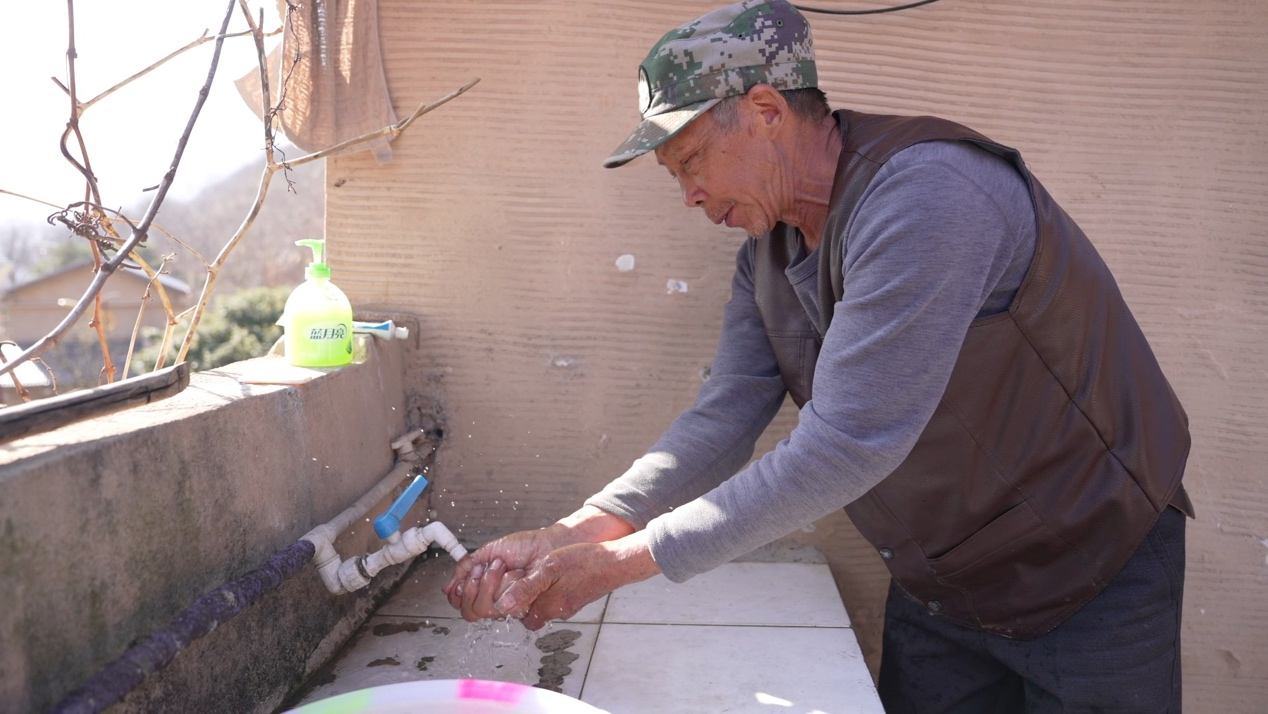
Local resident Xiang Yucai washing his hands with running water, which he said was made possible last year.
The valley that shines with beauty
As the sun dipped behind the mountains, we boarded the cable car one final time. Golden light washed over the cliffs. The steel cables hummed softly as we crossed from one side of the valley to the other.
From above, Gulu no longer felt cut off. Roads traced the mountain contours. Concrete walkways gleamed faintly. Small homes clustered with quiet resilience.
Zheng told me he looks forward to sharing Gulu's story in Beijing - proof that rural revitalization is not merely a slogan, but something tangible.
As an African journalist, I could not help drawing parallels with rural communities across my own continent, places where geography often defines destiny. In Gulu, geography is still dramatic, still formidable. But it is no longer insurmountable.
A ribbon of steel now connects cliff to valley.
It has shortened distances.
It has widened horizons.
And it carries a community, once bound to vines and ladders, toward a new chapter of possibility.
(All photos via CGTN)
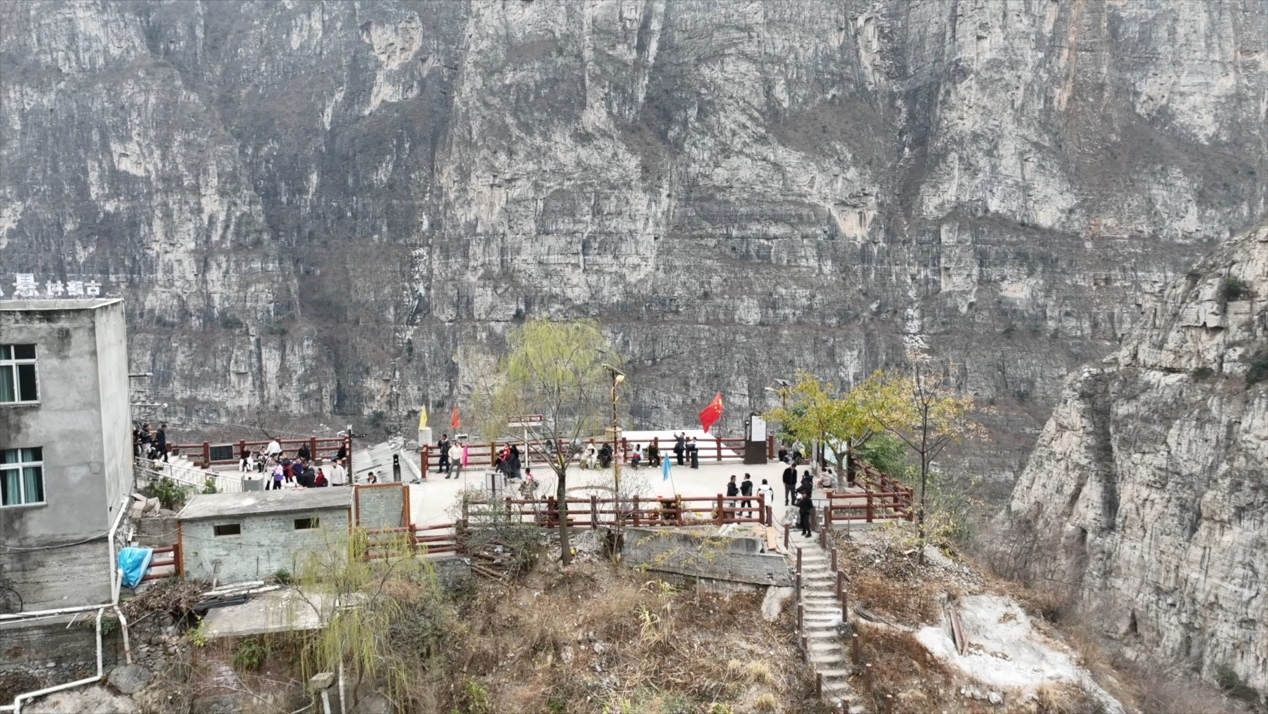
A view of Gulu Village, southwest China's Sichuan Province.
